
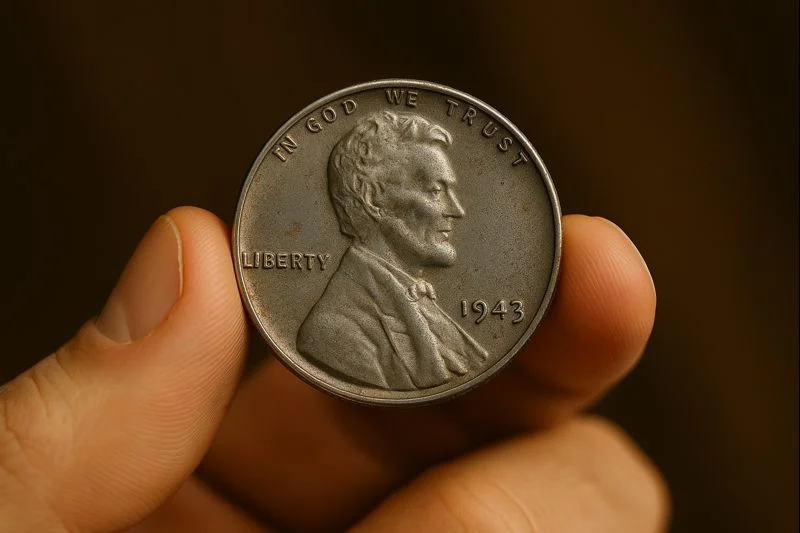
The 1943 steel penny value is shaped by wartime metal changes, high mintages, and the way zinc-coated steel behaves over decades. The coin stands out because it was the only U.S. cent made from steel. Its identity is tied to resource shortages during World War II, the shift away from bronze, and the rapid adoption of an unfamiliar alloy.
Most pieces survived in large numbers. Many kept sharp details because steel resists wear better than bronze. Yet scarcity appears in specific grades, surface conditions, and mint errors linked to planchet mix-ups and die abrasion.
Value forms through a mix of condition rarity, surface stability, zinc quality, and the presence of recognized errors rather than age alone. Understanding these points helps classify the coin quickly and avoid assumptions based on year or appearance.
Overview and Historical Background of the 1943 Steel Cent
The 1943 cent reflects wartime priorities. Copper was diverted to ammunition, and the Mint adopted zinc-coated steel. The change affected design visibility, durability, and long-term surface behavior. Steel cents remained light, magnetic, and prone to spotting, while the zinc layer slowed corrosion but did not eliminate it.
Philadelphia, Denver, and San Francisco produced over a billion coins combined, yet quality varies. Many cents show peeling zinc or dull patches, while others retain clean surfaces.
Core Specifications of the 1943 Steel Penny
| Parameter | Value |
| Metal | Steel core with zinc coating |
| Weight | 2.70 g |
| Diameter | 19.05 mm |
| Edge | Plain |
| Mints | Philadelphia, Denver, San Francisco |
| Special notes | Only regular-issue U.S. steel cent; prone to spotting, plating breaks |
These facts create the basic identification set. Once a collector confirms metal, weight, and appearance, further evaluation becomes faster.
A coin identifier is useful at this stage. It helps verify the metal group and confirm that the coin fits the correct wartime profile before deeper inspection of grade or errors.
Base Value Chart for 1943 Steel Cents (All Mints)
Before reviewing errors or rarities, it helps to define typical market behavior. Condition, surface stability, and mint mark create the main divisions. The table below shows realistic, stable price groups based on current public market data. Values reflect the wide difference between circulated steel cents and high-grade survivors with clear luster.
Value Chart by Grade
| Grade | 1943 (P) | 1943-D | 1943-S | Notes |
| Good–Fine (G–F) | $0.05–$0.20 | $0.05–$0.25 | $0.05–$0.30 | Common circulated pieces |
| Very Fine–Extremely Fine (VF–XF) | $0.20–$0.50 | $0.25–$0.60 | $0.30–$0.70 | Light wear; stable surfaces |
| About Uncirculated (AU) | $0.50–$1.50 | $0.60–$2 | $0.70–$2 | Trace friction only |
| MS60–MS62 | $1–$3 | $1–$4 | $1–$4 | Entry-level Mint State |
| MS63–MS64 | $3–$8 | $4–$10 | $5–$12 | Moderate luster; minor marks |
| MS65 | $12–$25 | $15–$30 | $18–$35 | Attractive surfaces; clean fields |
| MS66 | $30–$70 | $40–$80 | $50–$100 | Collectible quality; limited supply |
| MS67 | $120–$250 | $150–$300 | $180–$350 | Scarce high-end survivors |
| MS68 | $400–$900 | $500–$1,200 | $600–$1,500 | Premium pieces; auction territory |
All price ranges shown above are approximate and based on typical retail and collector-market activity. Exceptional eye appeal, certification, or auction demand may produce higher or lower results. These values should be used as a general guide rather than fixed pricing.
Why the 1943 Steel Penny Is Often Misunderstood
The coin appears unusual because of its color and magnetic reaction, but the year itself does not create rarity. Misunderstanding comes from the contrast between the massive wartime output and the small number of high-grade survivors.
Steel retains detail well, yet zinc coating breaks easily. Many pieces show rough spots, faded luster, or corrosion pockets. These issues push most coins into low-value categories despite the iconic date.
Three points explain the gap between expectation and reality:
- High mintage: more than one billion coins reduces scarcity across circulated grades.
- Surface instability: zinc fails where it thins, exposing steel to oxidation.
- Grade concentration: thousands survive, but only a small fraction remain clean enough for MS65 or higher.
Collectors rely on these structural signals rather than the year alone. Recognizing this pattern prevents overestimating typical finds.
Mint-by-Mint Behavior and What Affects Pricing
Philadelphia, Denver, and San Francisco each show different tendencies. These differences affect how prices form across the chart and why certain mint marks show stronger premiums.
Philadelphia (no mint mark)
Philadelphia produced the largest output. Most pieces appear worn or show plating breaks. Clean MS coins exist, but they compete with a large base of average examples.
Price increases occur mainly at MS65 and above because population numbers shrink sharply. Luster variations appear more often here due to plating inconsistencies.
Denver (D)
Denver issues show sharper strikes and slightly better plating. As a result, attractive MS coins appear more frequently.
However, the market still rewards high-grade examples because even clean Denver pieces often show small marks from high-speed production.
Premiums remain stronger than Philadelphia in MS65–MS67, reflecting better surface stability.
San Francisco (S)
San Francisco produced a smaller volume, and many coins display a different look: slightly softer strike details but more uniform plating.
This combination makes attractive MS coins desirable. Strong luster and clean rims push prices upward in MS66 and MS67.
Survival in MS68 is rare, which is why top-grade S-mint coins often exceed the values of P and D examples.
Mint behavior shows why pricing does not rely on mintage alone. Surface quality, strike consistency, and long-term stability determine the separation between common and premium coins.
How Errors Shape 1943 Steel Penny Value
Errors define the upper edge of the market. They form through metal mix-ups, die abrasion, and planchet variation. These events create small groups with clear diagnostics, making them highly desirable.
1943 Bronze Cent Error
This is the most famous error related to the series. Bronze planchets from 1942 entered the 1943 production line by mistake.
Main points:
- Color: brown or red rather than gray-steel tone.
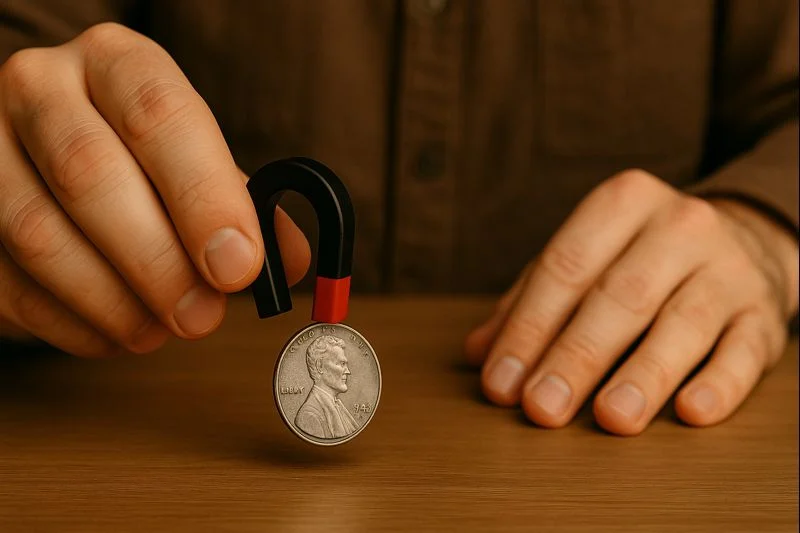
- Magnetic response: bronze does not stick to a magnet.
- Weight: 3.11 g instead of 2.70 g.
Authentic pieces sell at high auction levels. Most claims are fakes, so confirmation through weight and magnet tests is essential.
Wrong Planchet Steel Cents
A small number of coins were struck on non-standard steel blanks. Off-metal pieces show unusual thickness, tone, or weight. These errors require scale measurements and careful visual checks.
Die Breaks, Cuds, and Cracks
Steel cents reveal die damage clearly because the surfaces reflect flaws sharply. Cuds and breaks alter the rim or lettering. Value depends on size and clarity.
Abraded Dies / Missing Plating Zones
Heavy die abrasion weakens detail. Missing plating patches show exposed steel. Some areas form distinct patterns that collectors track.
These errors stand above standard market ranges because they form repeatable, identifiable categories.
Understanding which anomalies create value helps avoid confusing damage with collectible traits.
What a Collector Should Look For First
A consistent workflow helps separate routine pieces from those worth grading or holding. The 1943 steel cent responds well to structured evaluation because its key traits appear clearly on the surface. Even when handling bulk lots, the same sequence reveals which coins belong to the narrow high-value group.
Metal confirmation
Steel with zinc coating is the default. Coins that fail the magnet test or show copper tones require immediate attention.
This step filters out the rare bronze error and confirms whether the piece belongs to the standard wartime alloy.
Condition check
Surface preservation defines most price gaps. The following indicators matter most:
- Uniform zinc layer without dark spots.
- Strong luster with uninterrupted flow lines.
- Minimal contact marks on the fields and devices.
Clean surfaces show that the coin avoided circulation damage and storage corrosion, placing it closer to the MS chart bands.
Strike clarity
Steel tends to strike well, but worn dies and heavy production speed caused softness in some batches.
Sharp lettering, crisp Lincoln profile lines, and clean wheat stalks suggest a higher-grade candidate.
Mint mark inspection
Denver and San Francisco pieces may outperform Philadelphia in the same grade due to plating and strike tendencies. A quick mint comparison helps predict which examples might reach stronger values.
This sequence removes doubts and highlights where the price structure shifts from common to collectible.
Practical Use of Digital Tools for Faster Sorting
Digital tools serve as supporting instruments. They help organize large quantities and provide quick orientation, but do not replace close visual checks. Used correctly, they reduce handling time and make early decisions more precise.
A coin identifier assists with:
- Distinguishing steel from bronze when the color is unclear.
- Checking whether plating, tone, or weight suggests an anomaly.
- Comparing the obverse–reverse arrangement to standard 1943 steel cent references.
The best free coin identifier app gives a fast visual match when reviewing batches or inherited collections. A single photo often places the coin within the correct mint and metal group. This makes the first pass through mixed coins much faster and prevents overlooking potential varieties.
Coin ID Scanner remains practical for early classification. It recognizes metal type, minting parameters, year range, and other specifications based on the photo. The app includes a large database, which helps verify that the surface texture, rim form, and device lines match normal wartime issues.
These tools narrow the field. Final judgment still requires checking luster breaks, marks, strike sharpness, and variety diagnostics under proper lighting.
Closing View: Reading the 1943 Steel Cent Accurately
A 1943 steel cent is easy to judge once the basics are clear: metal first, condition second, errors last. Most coins stay common, but clean surfaces, sharp strikes, and verified mistakes push value higher. A steady routine makes sorting faster and helps separate ordinary pieces from those worth a closer look.